
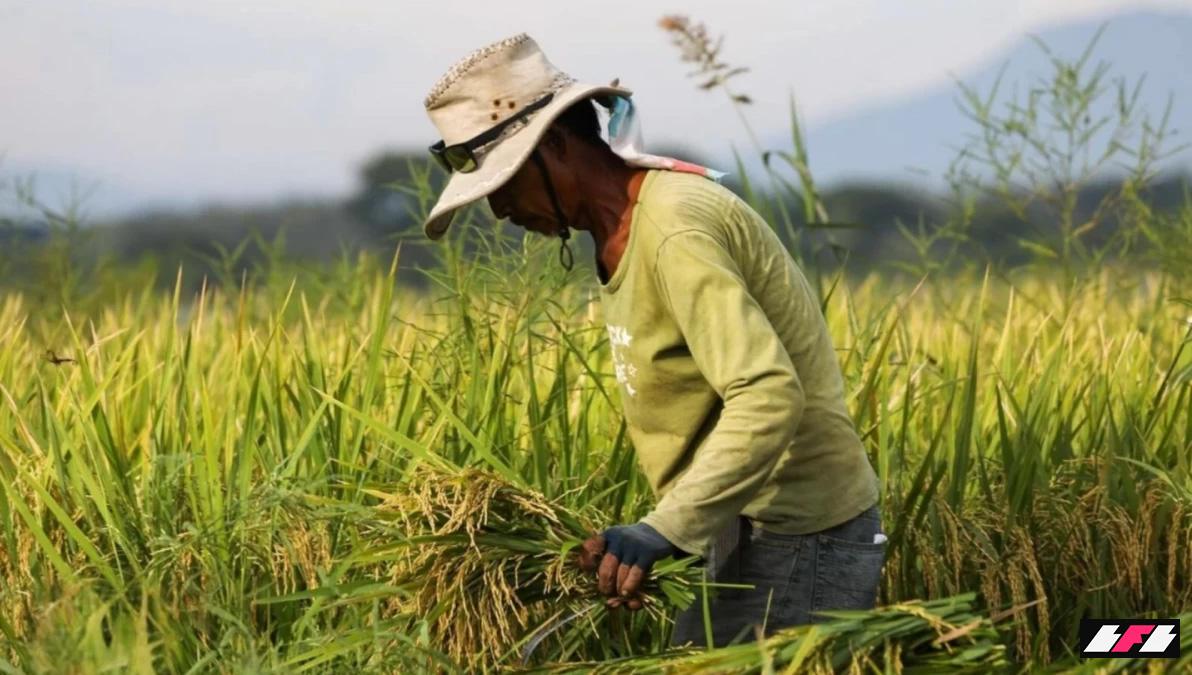
Farm output rises 0.5% in Q4 as poultry gains offset crop slump
Updated: April 15, 2026
Agri-fisheries output jumps 2.6% in 2025, beats target despite weak Q4
The country’s agriculture and fisheries output grew by 2.6 percent last year, exceeding the government’s projection as gains in crops and poultry offset a weak performance in the fourth quarter.
The latest data from the Philippine Statistics Authority (PSA) released on Wednesday, Jan. 28, showed that the value of agriculture and fisheries production, at constant 2018 prices, reached ₱1.77 trillion last year.
This marked a reversal from the 2.1-percent contraction recorded in 2024, when output totaled ₱1.73 trillion, as the sector was battered by extreme weather disturbances.
Growth last year was faster than the government’s initial estimate of one to two percent, largely due to strong performance in the first three quarters.

If not for the subpar fourth quarter, Agriculture Assistant Secretary Arnel de Mesa said full-year growth would have been higher, as crop production took the hardest hit during the period.
From October to December 2025, farm output posted 0.5-percent growth valued at ₱487.04 billion, compared with a two- percent contraction in the same period in 2024, when output stood at ₱484.59 billion.
Crop output, which accounted for 56.3 percent of the period’s total agriculture and fisheries production, fell by 2.5 percent to ₱274.3 billion from ₱281.48 billion a year earlier.
According to the PSA, palay, or unmilled rice, contributed the most to the decline in the subsector, with output dropping by 5.2 percent from the previous year.
De Mesa attributed the weaker performance to a string of typhoons that disrupted harvests during the quarter, particularly in October and November.
For the full year, crop output still managed to rise by 2.8 percent to ₱986.8 billion, accounting for 56 percent of total agricultural production, driven by favorable weather conditions from January to September.
Agriculture Secretary Francisco Tiu Laurel Jr. said this underscores the need for a more climate-resilient agriculture sector this year through investments in infrastructure such as cold storage facilities, drying facilities, silos, and greenhouses.
“The goal is to temper weather shocks, stabilize supply, and smooth food prices for both producers and consumers,” Tiu Laurel said in a statement.
“Without faster adaptation, agriculture’s gains risk being washed out—quite literally—by the next storm,” he added.
In the fourth quarter, the value of livestock production rose by one percent to ₱68.42 billion from ₱67.74 billion, driven by improved hog output amid a decline in African swine fever (ASF) cases.
However, for the full year, the subsector declined by 2.3 percent to ₱246.42 billion from ₱252.28 billion in the previous year, reflecting persistent structural challenges.
Fisheries production grew by four percent in the fourth quarter to ₱66.1 billion, but ended the year slightly lower at ₱233.7 billion, down 0.3 percent.
Poultry output jumped by 8.9 percent in the fourth quarter to ₱78.18 billion, emerging as the agriculture sector’s bright spot in 2025.
On an annual basis, poultry production rose by 9.1 percent to ₱304.71 billion from ₱279.41 billion a year earlier.
De Mesa, who also serves as the Department of Agriculture’s (DA) spokesperson, said the government is confident it can sustain growth in farm output this year, banking on the nearly ₱300-billion allocation for the agriculture sector.
In particular, he cited programs supporting palay production, which is projected to reach 20.3 million metric tons (MT) this year, to further boost the contribution of crop output.